
Your child can thrive — and we know the way there.
When a newborn screening comes back with a flag, or when you start noticing that your toddler isn't responding the way other kids do, the weeks that follow can feel overwhelming. You're searching for answers, trying to understand test results written in language you've never seen before, and wondering what this means for your child's future. That's exactly where Ekho Audiology begins — not with a list of services, but with a conversation.
Dr. Kelly Anderson built this practice around pediatric hearing care because she has lived it from the inside. She was fitted with her first hearing aids at age one. She remembers sitting in her mother's lap playing listening games. She wore hearing aids through childhood, through sports, through all of it — and she is now a bilateral cochlear implant recipient and a mother herself. When she sits across from your family, she isn't reading from a clinical script. She has been where your child is, and she has been where you are.
Ekho Audiology provides personalized hearing care for children from newborn through school age. That care spans comprehensive hearing evaluations, hearing aid fittings, cochlear implant support, and parent counseling — all centered on one goal: helping your child thrive. Whether you're in the first days after a failed newborn screening or years into a diagnosis that still raises new questions, this practice is built to meet you where you are and move forward together.
Every child is different. Every family's situation is different. Dr. Anderson takes the time to understand yours — explaining what test results mean in plain language, walking through what treatment looks like step by step, and making sure you leave every appointment knowing what comes next. You won't be handed a pamphlet and shown the door. You'll have a provider who answers your questions, returns your calls, and stays involved in your child's care as they grow.
A Message from Dr. Kelly Anderson
I was born with severe-to-profound hearing loss. My earliest memory of sound is sitting in my mother's lap doing listening games — learning to attach meaning to the sounds my hearing aids were giving me for the first time. I wore those aids through childhood, through middle school, through sports where I'd weigh whether to keep them in or take them out depending on the play. That experience — the work of it, the small victories, the moments of connection it made possible — is what led me to audiology. Pediatrics is where my heart is. I became a bilateral cochlear implant recipient as an adult, and I'm also a mother. When families come to me in the first weeks after a diagnosis, I understand the fear and the questions and the uncertainty from the inside. My goal is to be the provider I would have wanted my own family to have — honest, clear, and genuinely invested in your child's outcome. I'm dedicated to supporting families at every step, from that first evaluation through every milestone that follows.
Our Pediatric Services
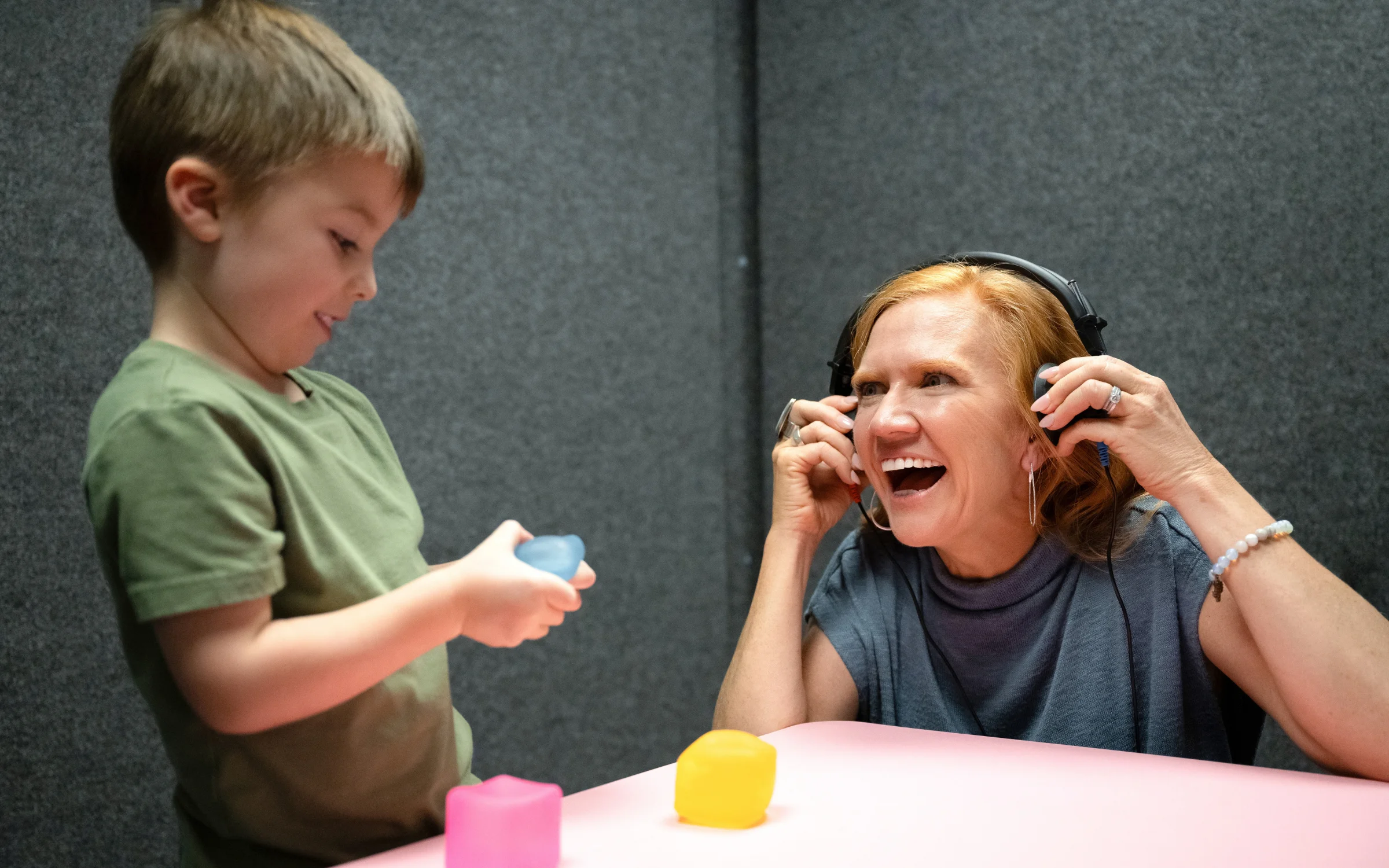
Ekho Audiology offers a full range of services for children from newborn through school age. Comprehensive hearing evaluations test your child's hearing across frequencies and give you a clear picture of where they are and what's recommended next. For children with mild to severe hearing loss, hearing aids maximize access to sound and actively support speech and language development — and can be fit within the first weeks or months after birth, when early intervention has the greatest impact. For children who are candidates for cochlear implants, Dr. Anderson provides ongoing cochlear implant support to make sure devices are performing at their best as your child grows. And because navigating a hearing diagnosis is as much an emotional process as a medical one, parent counseling gives families guidance, honest reassurance, and a clear roadmap from a provider who is both an audiologist and a mother.
Why Early Intervention Matters
The brain's window for language development is widest in the earliest years of life. When hearing loss goes unaddressed during that window, it doesn't just affect how a child hears — it can affect how they learn to talk, how they connect with other children, and how they perform academically for years to come. The sooner support begins, the more likely a child thrives socially, academically, and emotionally. That isn't pressure — it's the reason early detection and early action are so important. If something feels off, trust that instinct. Scheduling an evaluation is the right first step, and we'll help you understand exactly what your child needs to reach their full potential.
Understanding Levels of Hearing Loss
Hearing loss is described in degrees, and knowing what those mean helps families make sense of what they're hearing from providers. Mild hearing loss means your child may struggle with soft sounds and soft voices, especially at a distance. Moderate hearing loss makes it hard to follow normal conversation, particularly when there's background noise. Severe hearing loss means your child may not hear voices even at typical speaking volume. Profound hearing loss means your child relies primarily on visual cues — such as lip reading or sign language — or on devices like cochlear implants to access speech. Dr. Anderson will explain exactly where your child falls on this range and what that means for their care.
Signs of Hearing Loss to Watch For
Children can't always tell you what they're missing. What you're looking for are patterns — a baby who doesn't startle at loud sounds or doesn't turn toward your voice, a toddler whose speech is developing more slowly than expected, a school-age child who frequently asks you to repeat yourself or seems to struggle to follow instructions in noisy settings. Early detection makes a real difference in speech, language, and social development. If any of these signs feel familiar, an evaluation is the right next step — and the sooner, the better.
Family-Centered Care
Hearing care for a child is never just about the child. Parents, siblings, grandparents, teachers, and caregivers all play a role in how a child learns to listen and communicate. At Ekho Audiology, family members are welcome and encouraged to be part of the rehabilitation process — because it takes a village, and because the work families do at home matters as much as what happens in the clinic. Dr. Anderson will help your whole support network understand how to reinforce your child's progress every day.

From Both Sides of the Audiometer
Dr. Anderson was fitted with her first hearing aids at age one. She is now a bilateral cochlear implant recipient, a mother, and a board-certified audiologist with an Au.D. from A.T. Still University. She built this practice so families in Bend, OR and Central Oregon would have a provider who understands a hearing diagnosis from both sides of the audiometer.
If you have concerns about your child's hearing, we invite you to schedule an appointment today. Together, we will help your child reach their full potential.
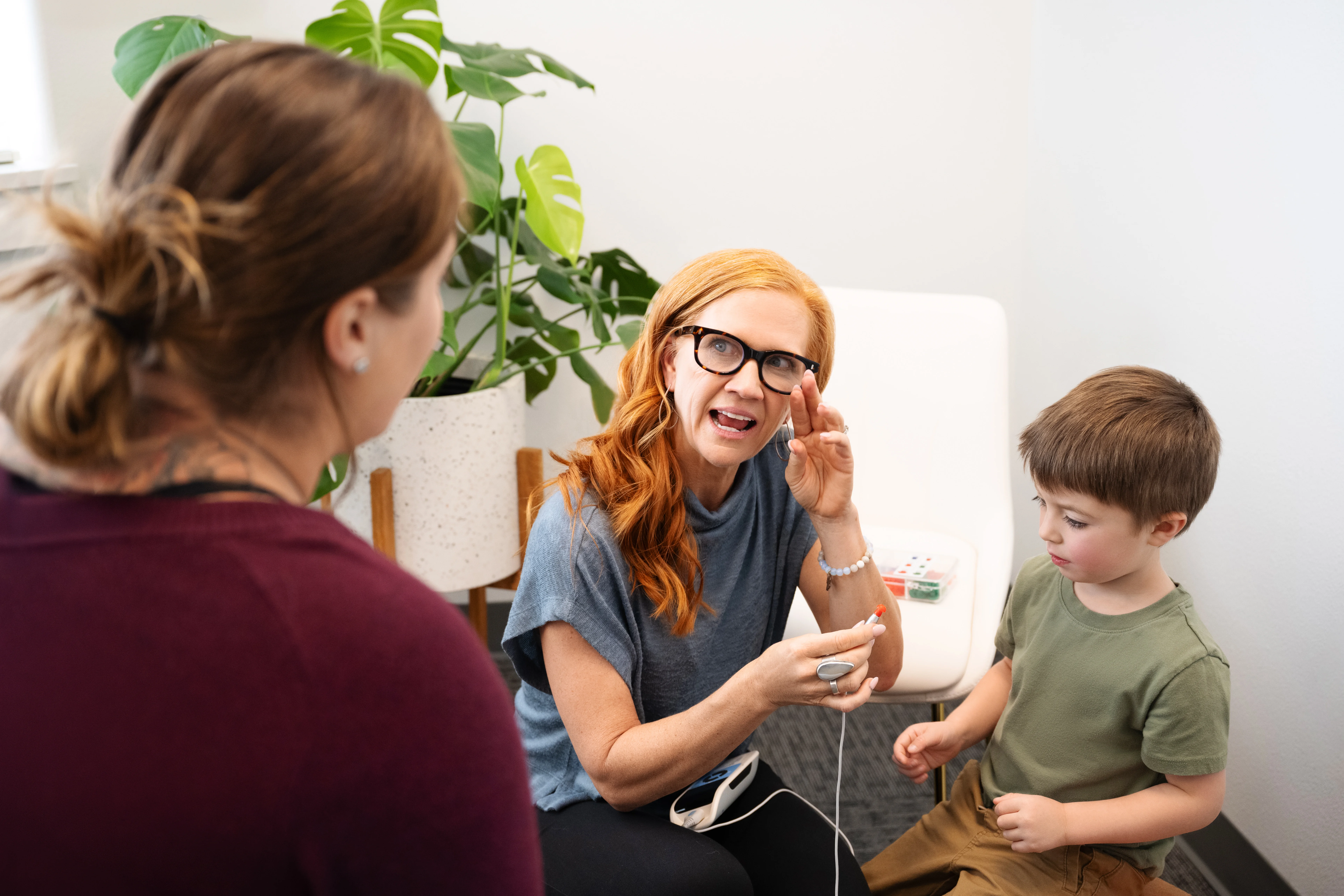
We believe in a family-centered approach to hearing healthcare. We invite family members to participate in the process of hearing rehabilitation. It takes a village.
Common Questions
My baby just failed the newborn hearing screening. What does that actually mean?
How young can a child be fitted with hearing aids?
My child was diagnosed with hearing loss a while ago. Is it too late to start?
What is the difference between a hearing aid and a cochlear implant — and how do I know which one is right for my child?
Do you accept families who use sign language or are part of the Deaf community?
What should I bring to my child's first appointment?
Schedule Your Child's Hearing Evaluation Today
If your child failed a newborn screening, you've noticed something feels off, or you're months into a diagnosis and still have questions — this is where you start. Call Ekho Audiology now to book your child's evaluation. Dr. Anderson will explain what the results mean, what comes next, and what your child needs to reach their full potential. One call. No clinical runaround. Just a provider who has been where your family is. Serving Bend, OR and Central Oregon.